
Exhibition, in person and online · Warsaw Gallery Weekend 2026
Look Me in the Window
They say peeping through someone's window is bad manners. Not this time. Every painting is a window onto another world, behind a thin curtain you only have to pull aside.
Visit in person
Elektrownia Powiśle, Loft +3
18–20.09.2026
ul. Dobra 42, Warszawa, 3. piętro
daily 11 am–7 pm
Map-
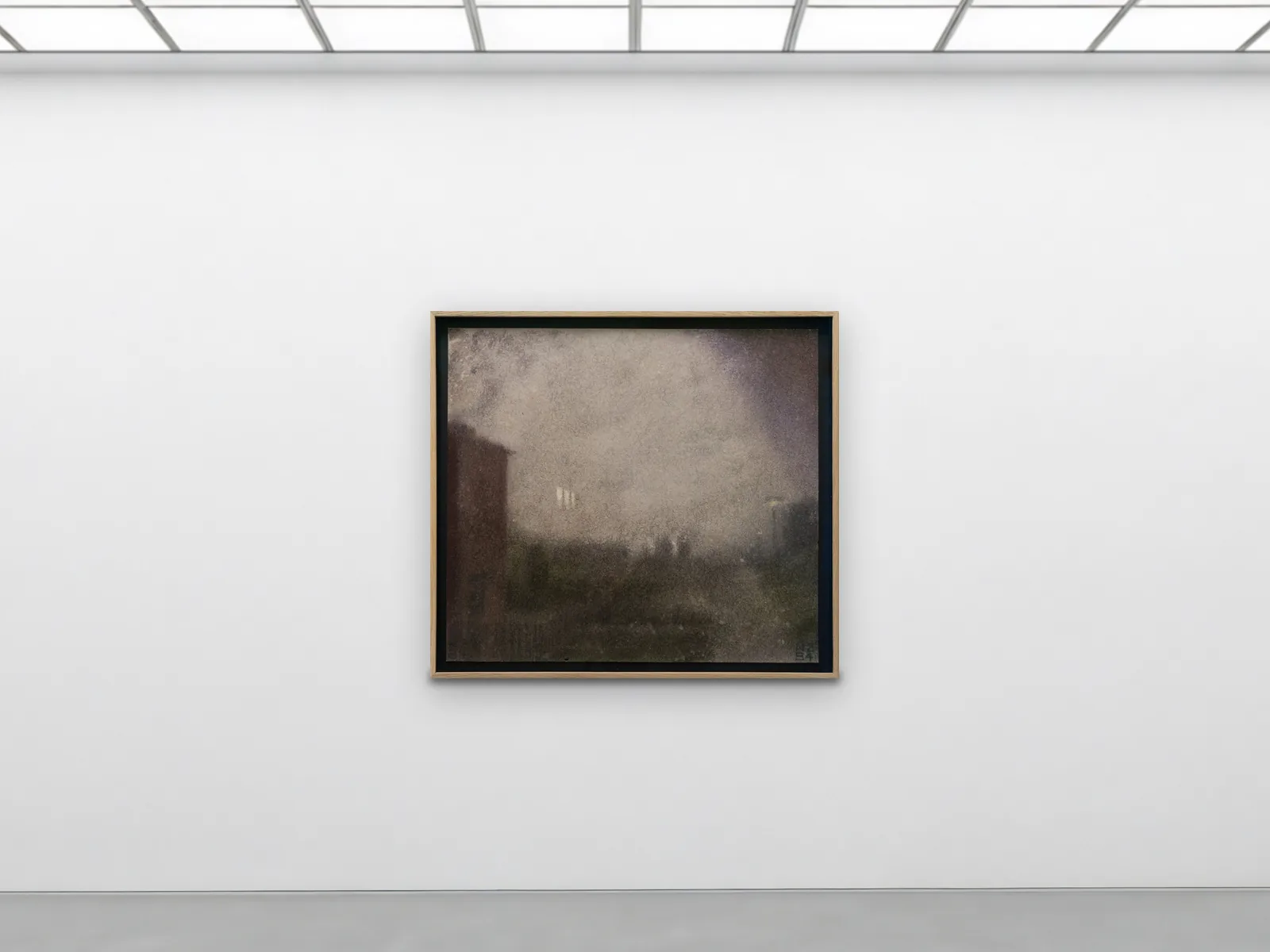
Wojciech Bąkowski The light of a house that is no longer there, 2024 Wojciech Bąkowski once said that in the eighties he spent a great deal of time surrounded by a large and very close family. That it all happened in a house that today looks nothing like it did and belongs to strangers, and that most of that family is dead or has vanished from his life. And that thinking about it brings on a sadness with a pleasant tinge to it.
Thank you, Wojtek. Pleasant indeed.
-
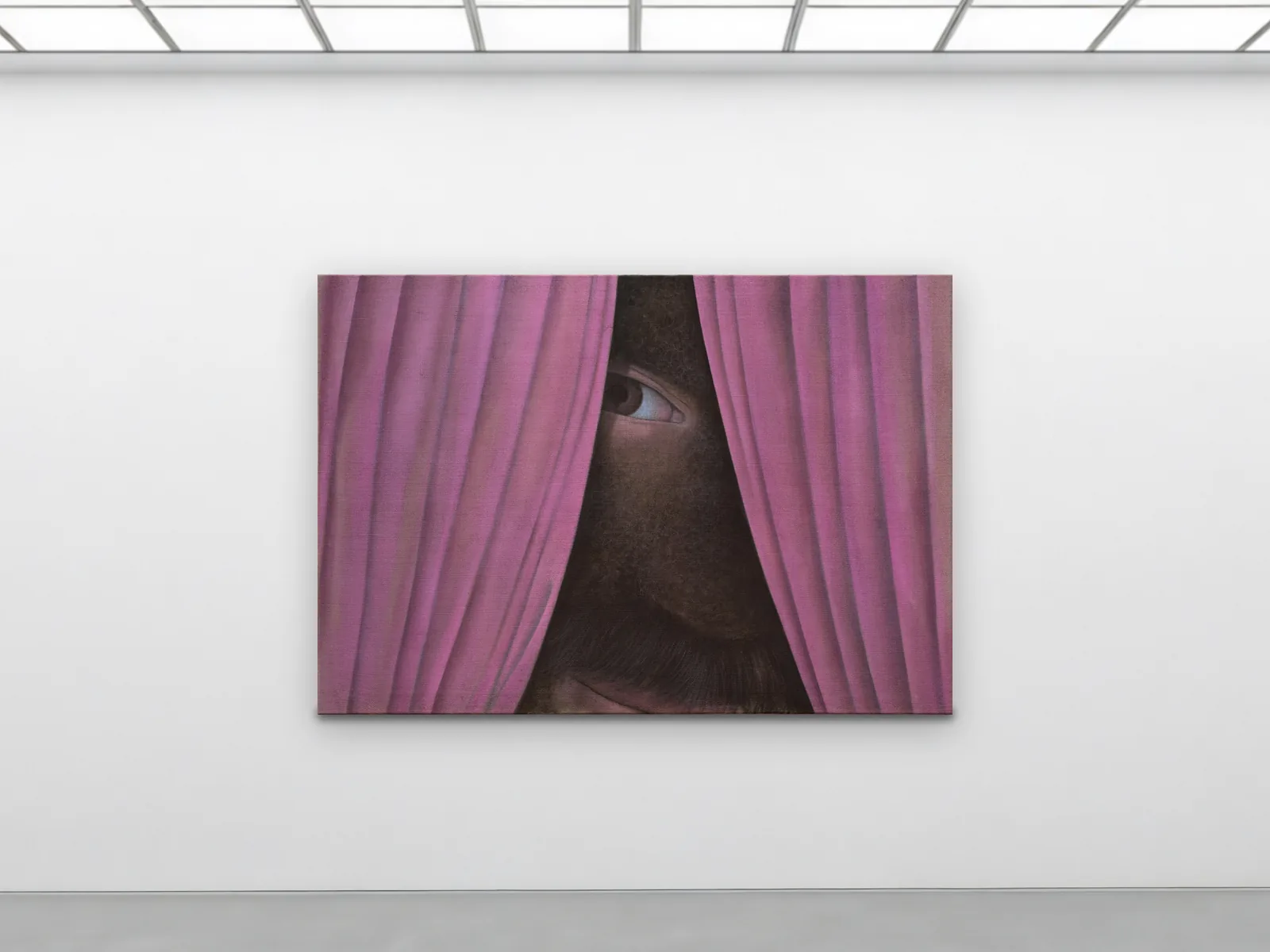
Arman Galstyan Can I Come Out Now?, 2026 Arman was born in Warsaw, but because of his Armenian roots he has always been watched, judged and called names. For a long time he tried to hide and to force himself to fit in, which unfortunately shows all too clearly in his earlier paintings. Here he parts the curtain and checks whether he can come out yet.
Well, can he?
-
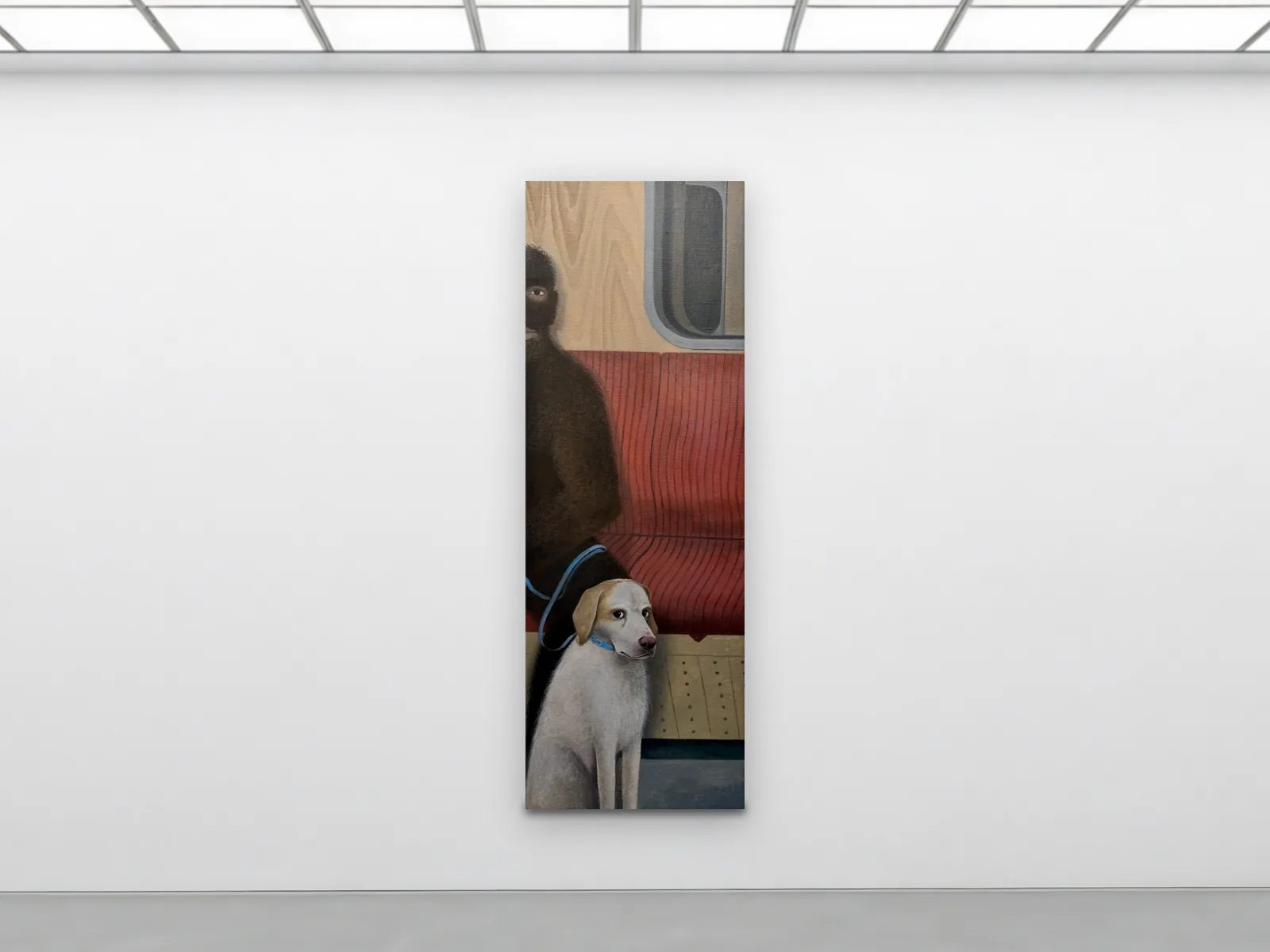
Arman Galstyan Metro, 2026 In Can I Come Out Now? Arman is still checking whether he can come out. Here he has made up his mind and stepped outside. He is on the metro, in the middle of the city where he was born and which so often treated him as a stranger. Even so, he does not look entirely at ease.
Happily, the same cannot be said of his dog.
-
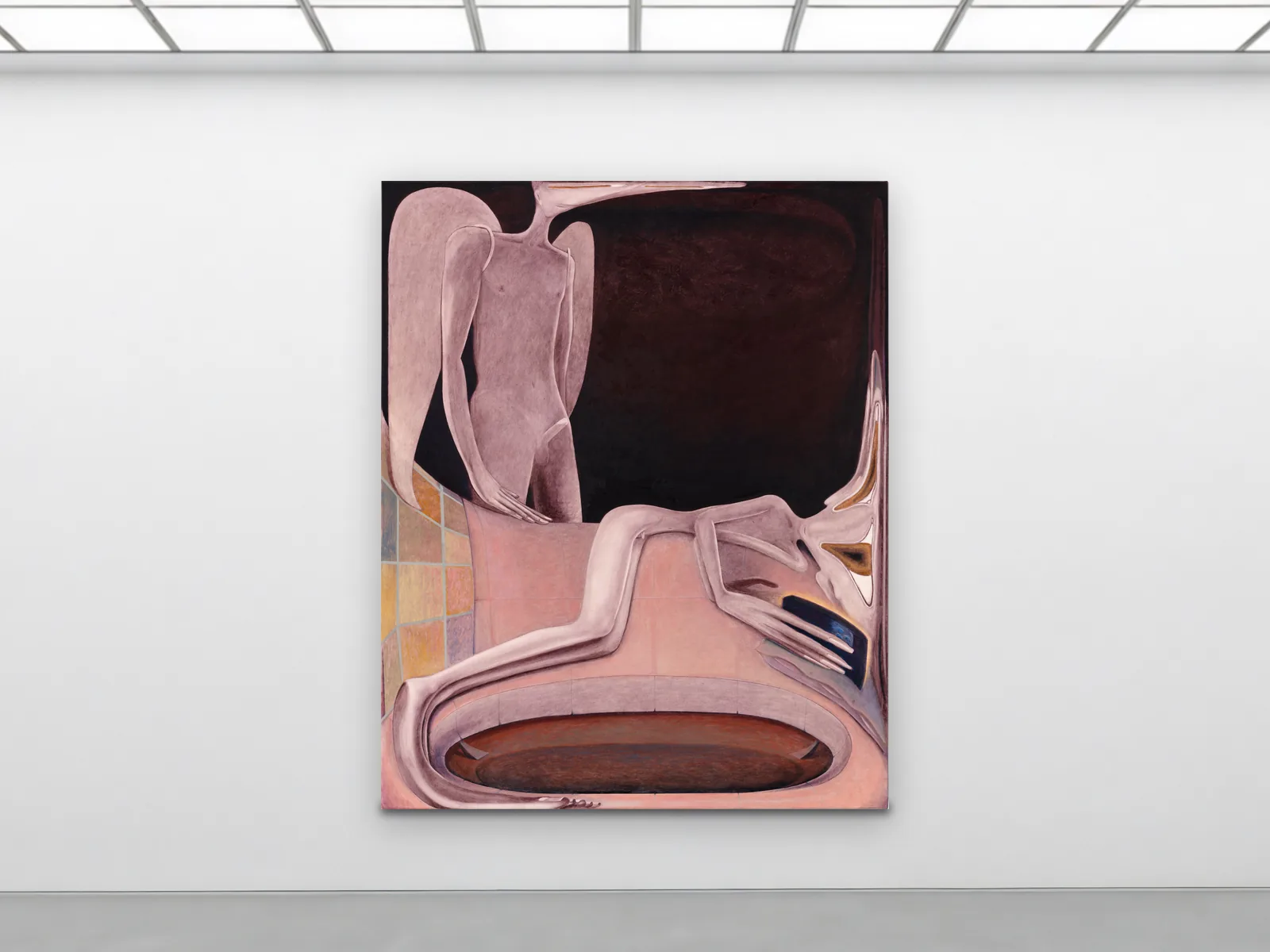
Krzysztof Grzybacz Apparition, 2022 In 1954 Lucian Freud painted Hotel Bedroom, in which his wife lies in bed while he stands behind her in shadow, against the window. It was the first double portrait he made, and everything that was going wrong between them is visible in it. In Grzybacz's painting the same tension comes back seventy years later. One figure stands, the other is bent the way bodies are bent in André Kertész's Distortions, nudes photographed in a funhouse mirror in 1933. A hand holds a phone glowing blue, at once a symbol of communication and of twenty-first-century loneliness.
The longer you look, the less certain it becomes who the apparition of the title really is: the one standing in the shadow, or the one staring at the screen.
-
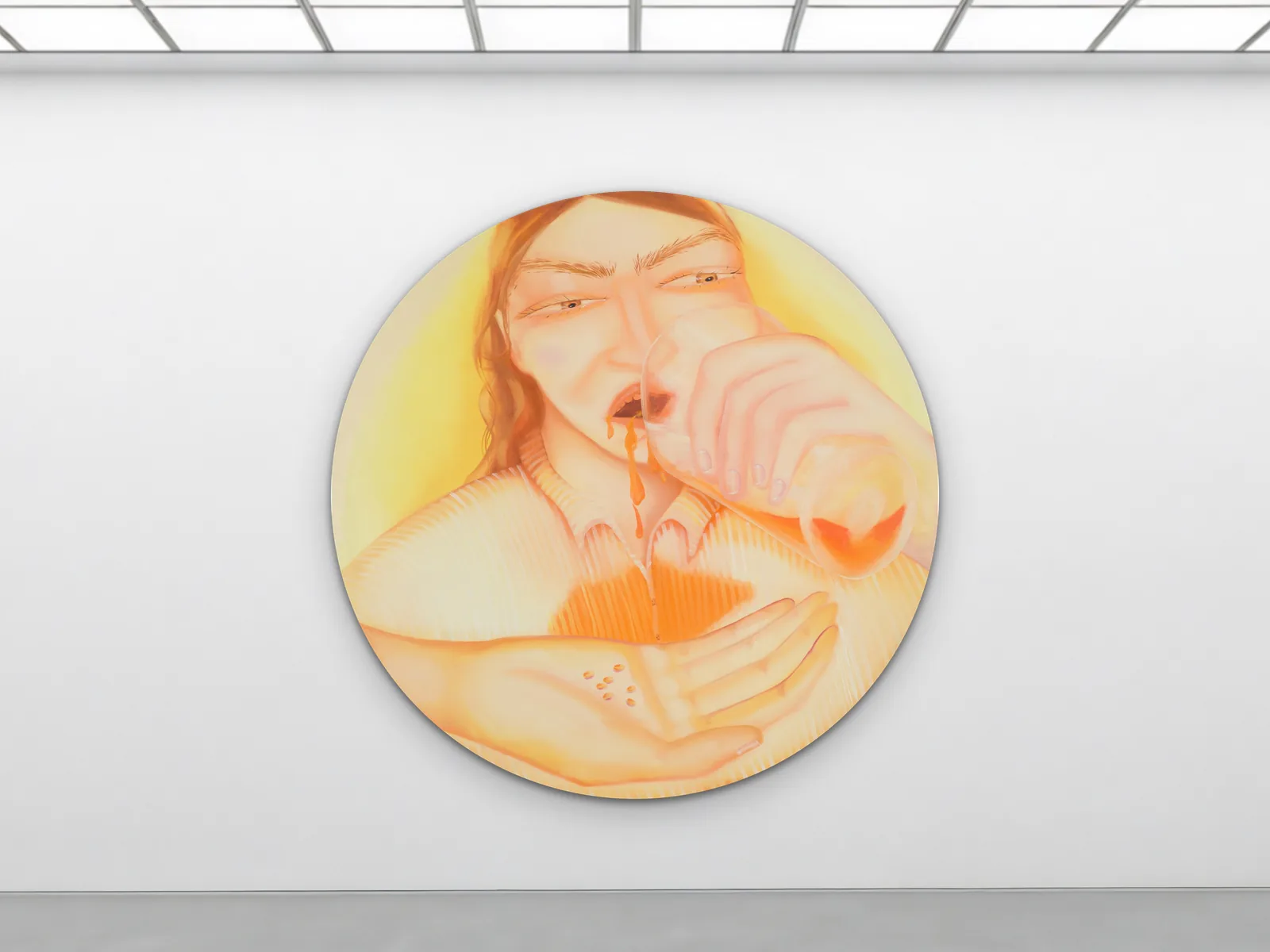
Karolina Jabłońska Tondo Vitamin C, 2021 During the pandemic Karolina Jabłońska painted mostly in dark navies and greens, because it seemed to her then that her career had nothing interesting left in it. We now know that, happily, she was wrong. On top of that, things brightened up between one lockdown and the next, and you can see it in this painting. The motif of getting better ended up on a round support, which also let her paint something close to a sun. She needed one, because her studio was in a basement at the time, so this tondo could get her ready for whatever came next.
To this day I “use” this painting in exactly that way.
-
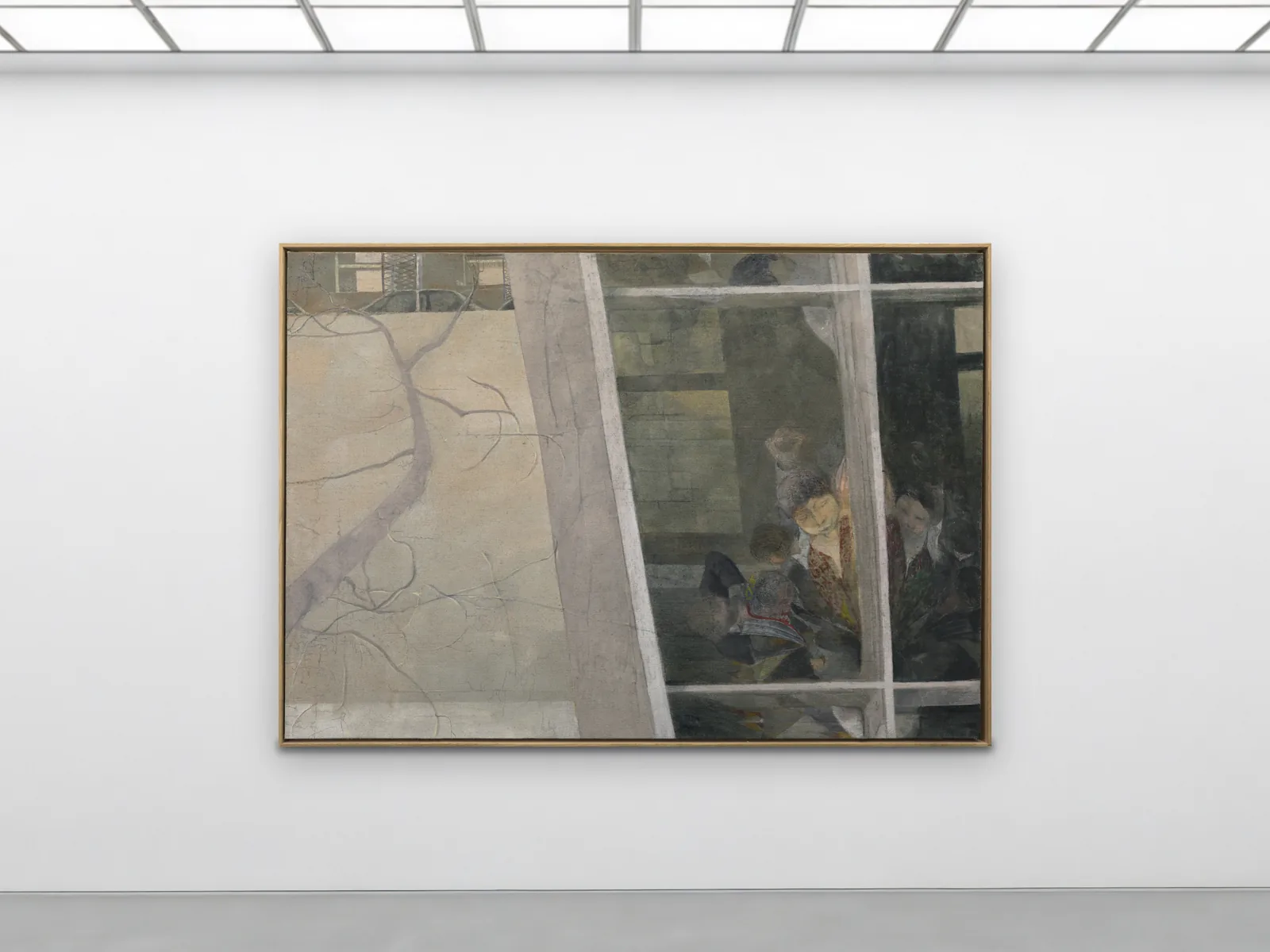
Tomasz Kowalski Untitled, 2024 If Giordano Bruno was right that an invented image contains its own truth, then Tomasz's paintings are like the photograph that has always been in the family album. We do not remember it being taken, we may not even have been born yet, and still we take it as part of our own identity.
That is why my family is over there on the right. Or yours.
-
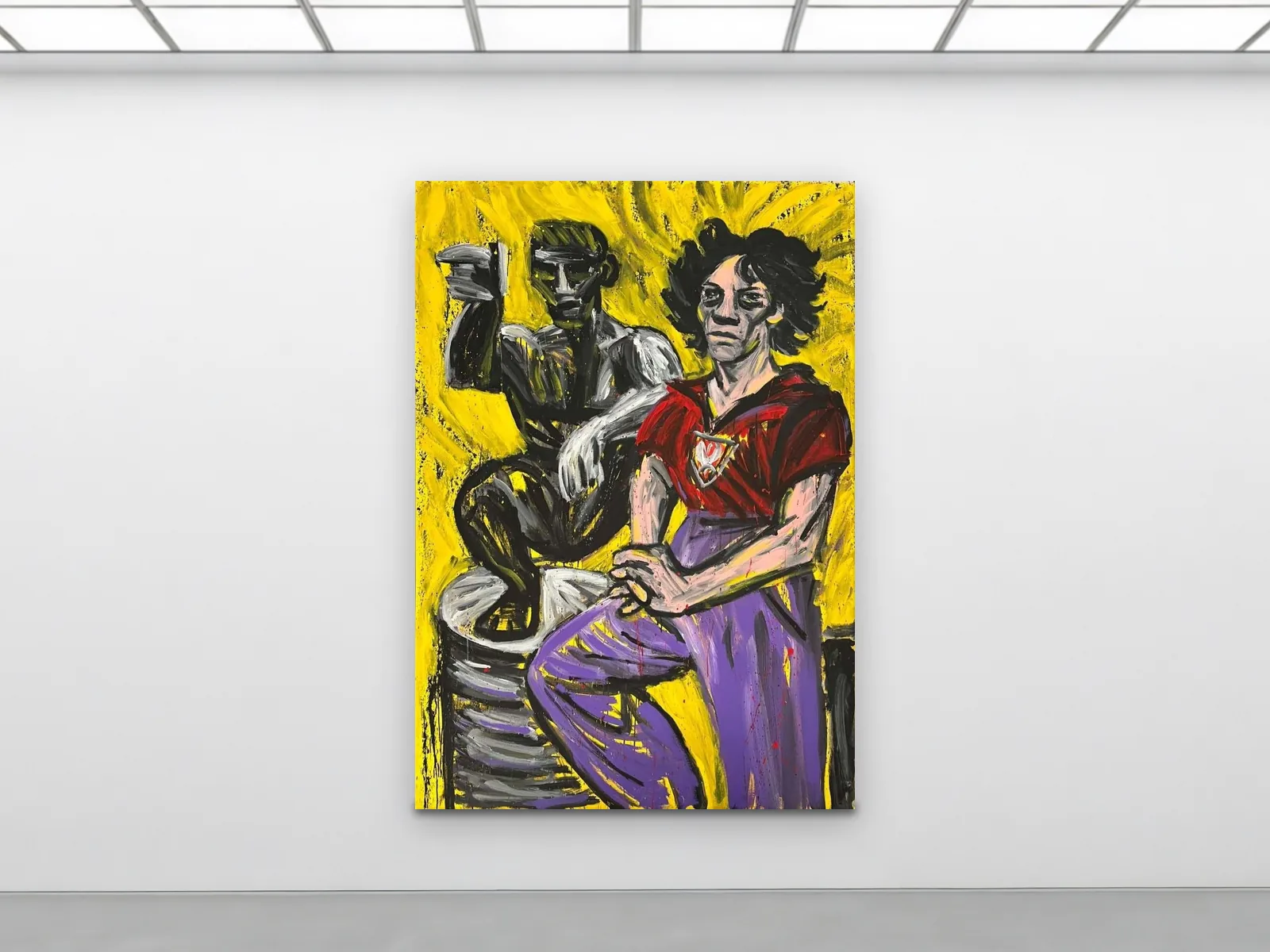
Karol Radziszewski Berlin 1936, 2024 The scene in this painting is authentic. At the Berlin Olympics the Polish sprinter Stanisława Walasiewiczówna stood beside a statue of an athlete, or rather beside an ideal of the human body in the only version that era would accept. Walasiewiczówna was intersex, something the world learned only after her death. So when the photograph was taken she was standing beside a template she did not fit and never could.
Which leaves me wondering about one thing only: what was going through her head.
-
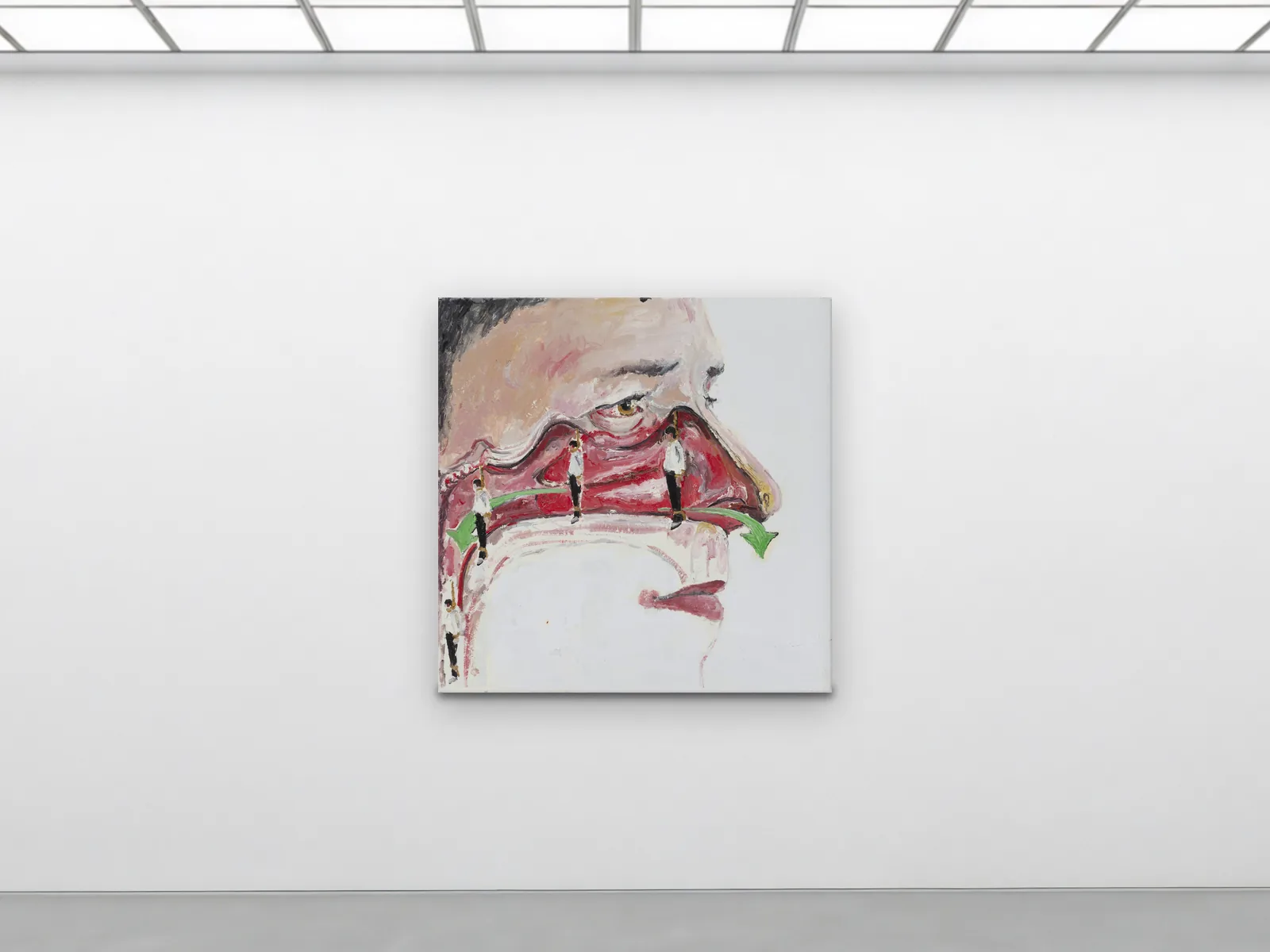
Mateusz Sarzyński Untitled (20 years), 2024 A month before the pandemic, BWA Warszawa opened a joint exhibition by Mateusz Sarzyński and Konrad Żukowski. The text that accompanied it began with a sentence by Mateusz: “When I was 14, my father hanged himself. If my father had not hanged himself, I would most likely never have become an artist.”
Over twenty years of breathing in and out have passed since then.
-
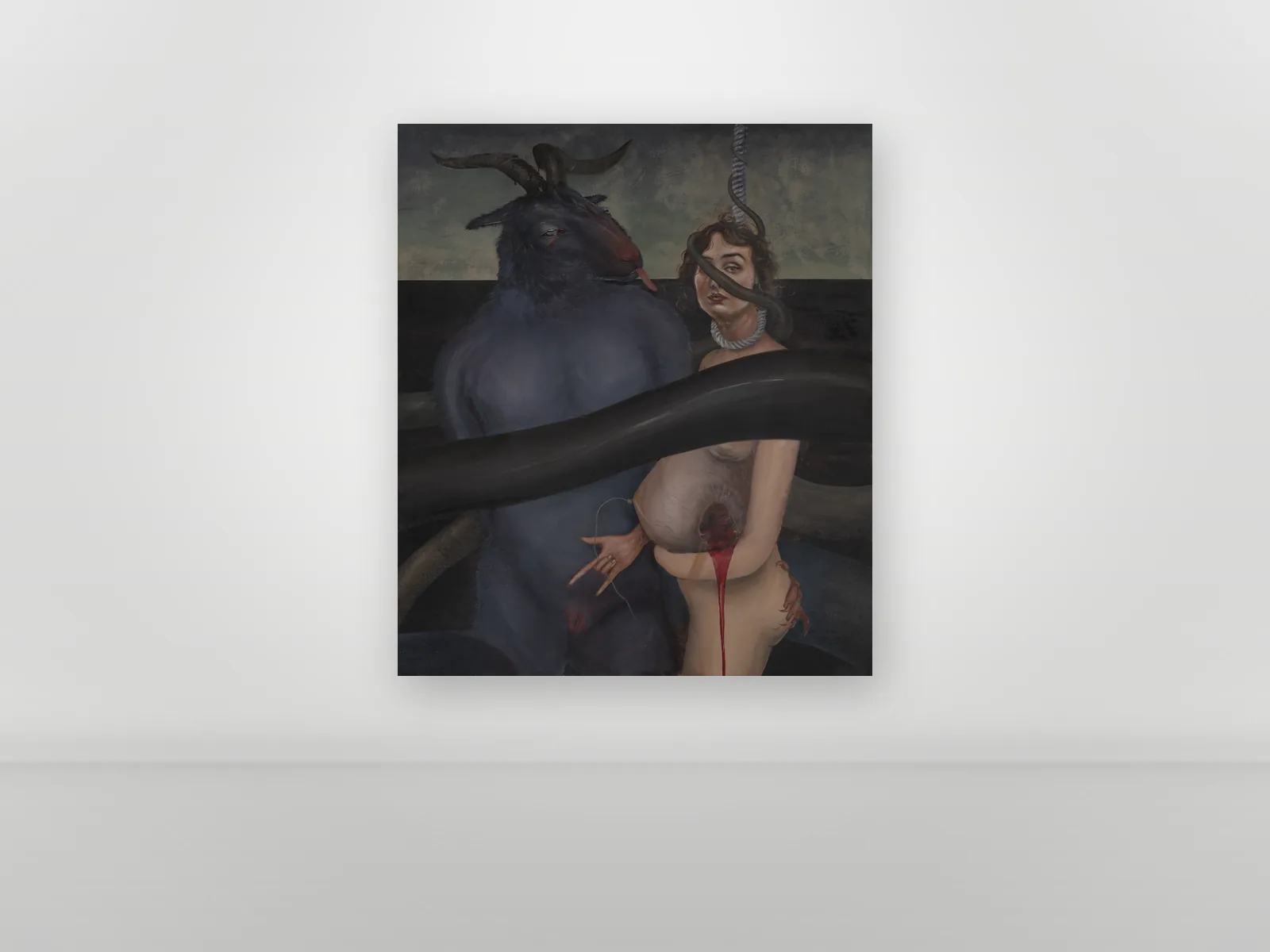
Agata Słowak Self-Portrait with a Balloon, 2019 The painting goes back to a time when ending a pregnancy was punishable by hanging, on any grounds at all, including when a woman lost the pregnancy through no doing of her own. Her family then had to denounce her, because such a sinner could not go on walking this vale of tears. So people kept an eye on women who had looked pregnant and then, by some strange chance, had no child. And this was a time when miscarriages were common enough. The balloon could burst very easily. So women turned to the devil, who, as Agata puts it, looked after them better. He drove bad people off with his great tail.
And he even wept tears of blood.
-
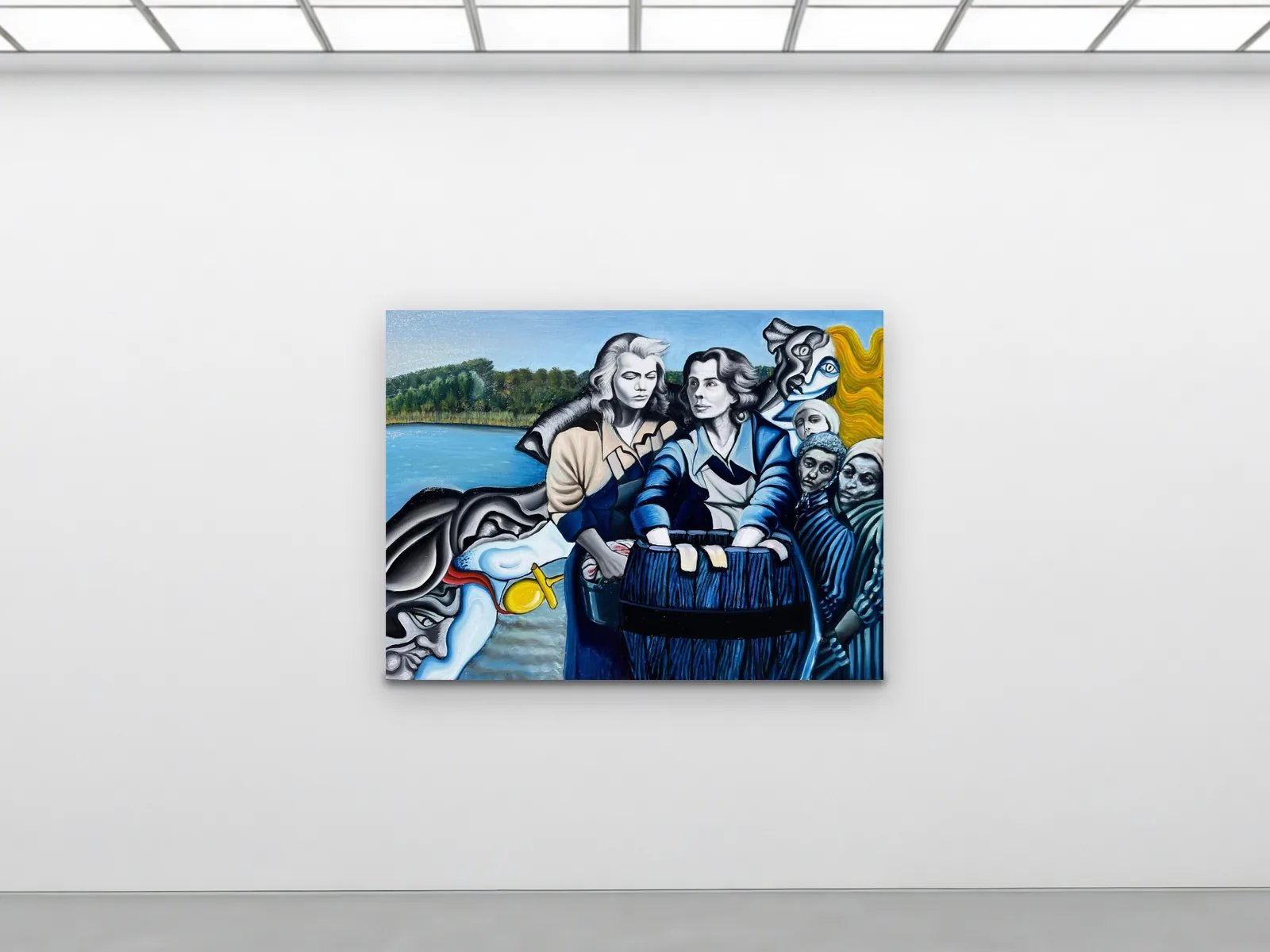
Mikołaj Sobczak Lilith, 2024 According to survivors' accounts and historical sources, 98% of women stopped menstruating almost immediately after arriving at a concentration camp. The few who went on menstruating were denied any sanitary supplies whatsoever. They were left with scraps of dirty clothing, striped uniforms and blankets, which then had to be washed. Many years later, because of a cultural taboo, they were denied their rightful place in the history books.
Behind the women of the title we see Lilith, the first woman who refused to obey and was written out of the official version for it.
Both stories are largely about the same thing.
-
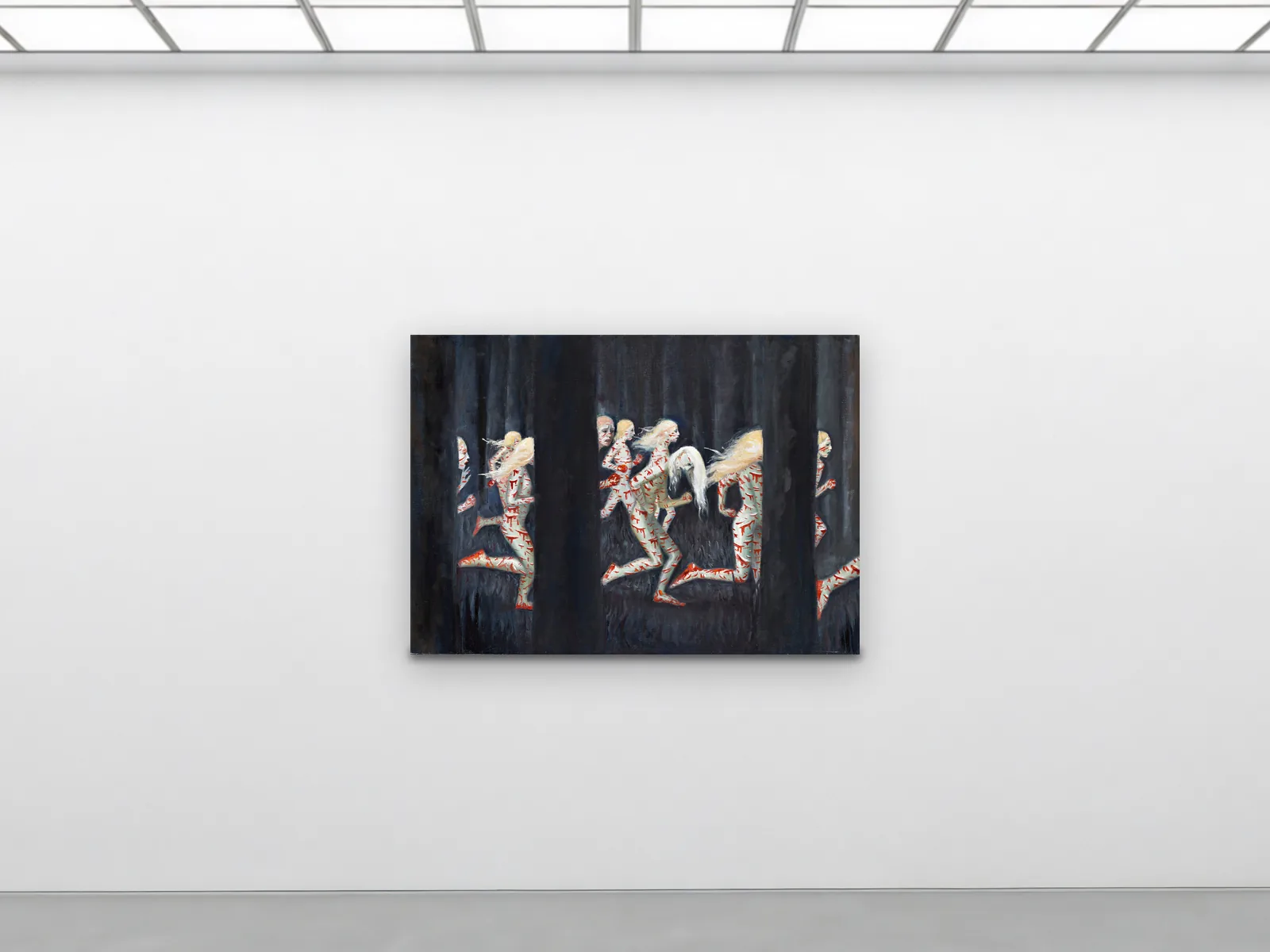
Aleksandra Waliszewska Untitled, 2023 Aleksandra Waliszewska once said that women attacked by monsters had interested her since childhood. They began to interest me much later, but I caught up in the end. Which is why I once wrote about her paintings that I like it when Aleksandra Waliszewska reminds me of death. I deleted the sentence at once, because it struck me as improper.
Then I put it back.
-
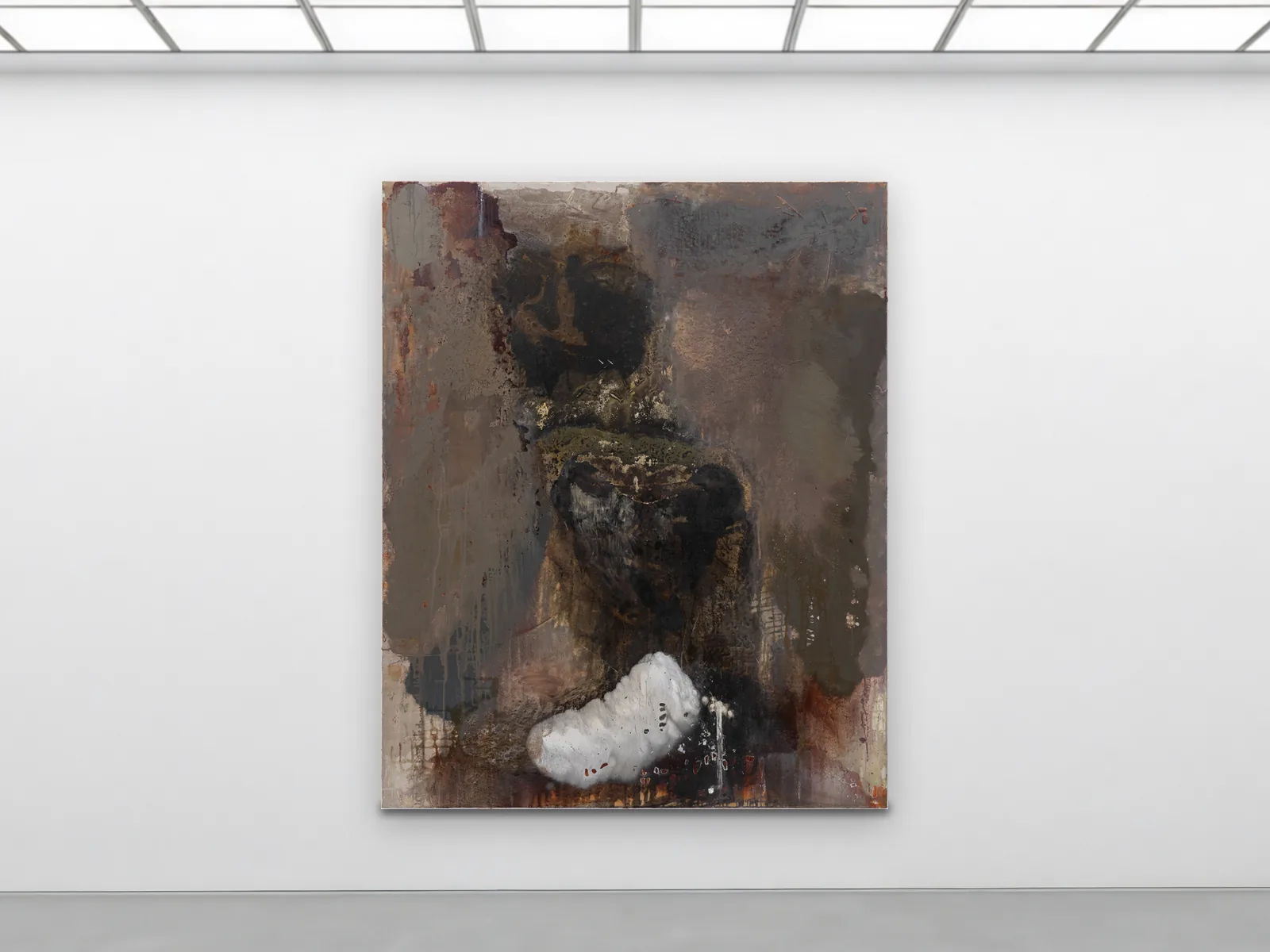
Barbara Wesołowska Omission, 2025 We grew up in a place where Gothic churches had stood for centuries, where images of the Virgin were everywhere and saints looked down at us from the walls. Whether we want it or not, surroundings like that stay in us, because they are familiar and long since tamed. In adult life we catch ourselves looking for them without meaning to. On top of all this comes the human tendency to see faces where there are not necessarily any.
In this painting I can see at least two.
-
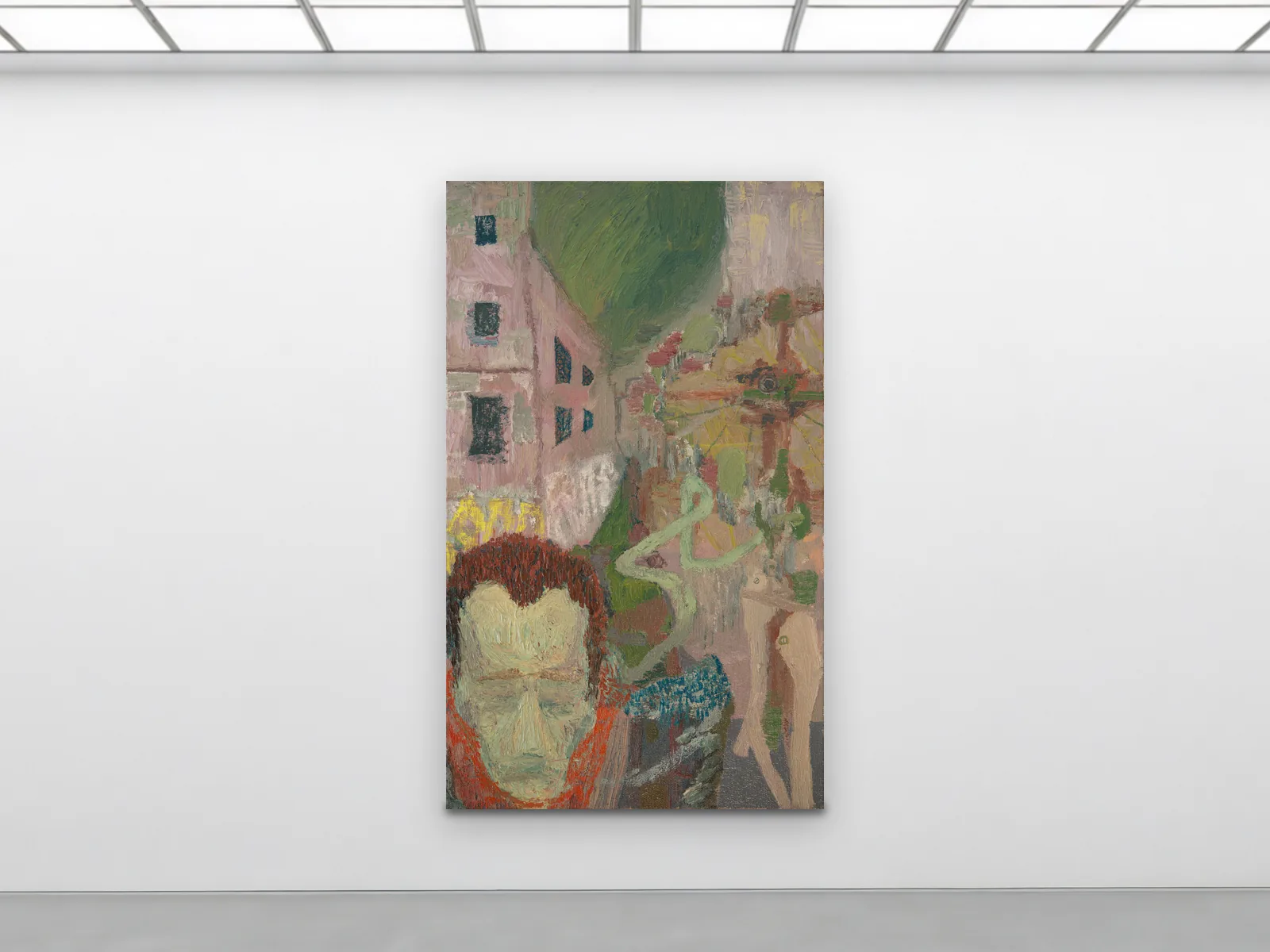
Jan Eustachy Wolski Untitled, 2024 Jan Eustachy Wolski lays the paint on so thickly that the houses look moulded out of plasticine, but they are not the point here, because every small town now has a camera that sees more than its residents do. This one hangs like an eye on a stalk and watches everything around it. Including a large head with a face set like a wooden mask, its eyes half closed.
The only open eye in this town belongs to the camera.
-
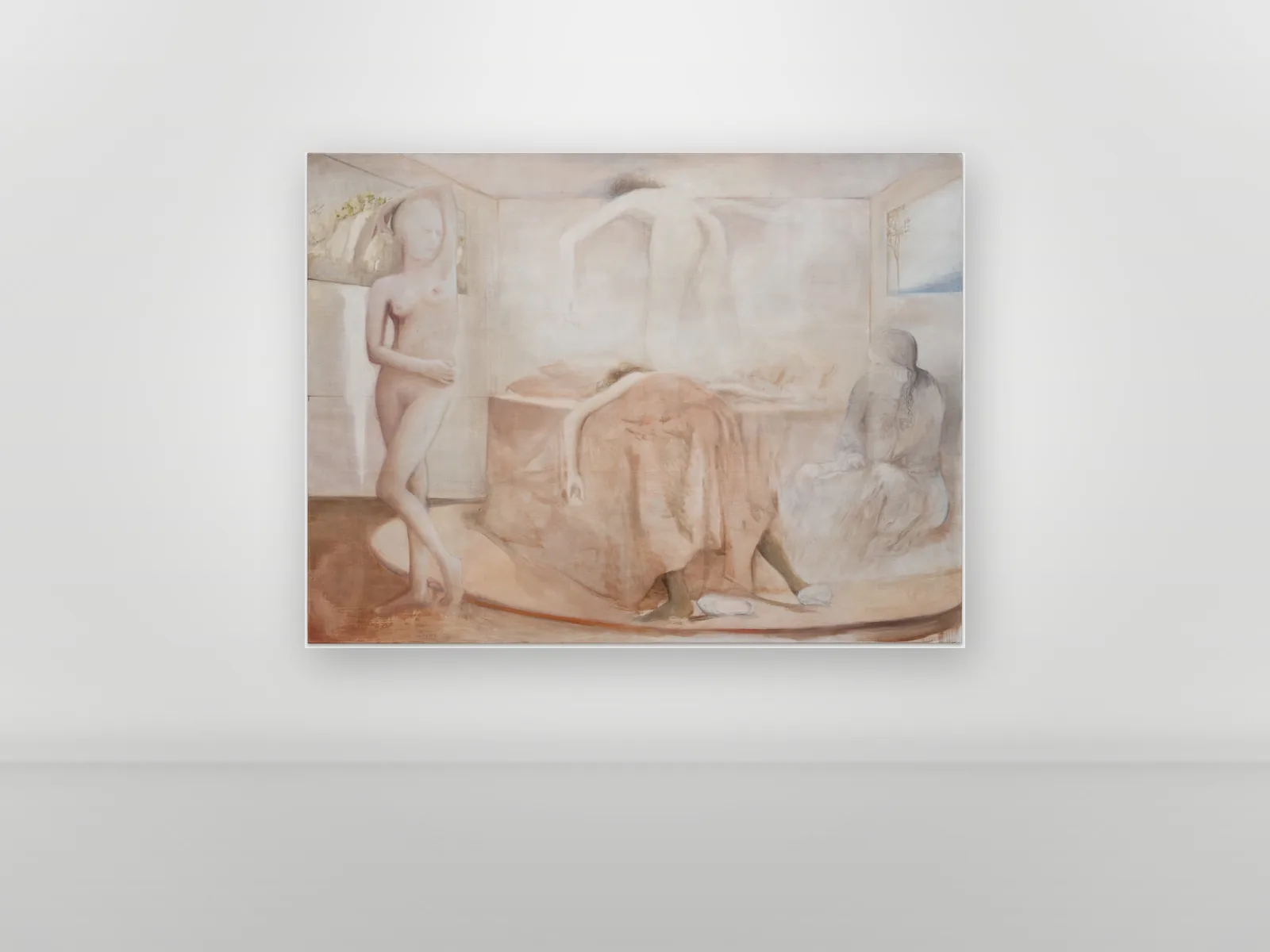
Joanna Woś Untitled, 2025 In Joanna Woś's paintings you can find references running from Renaissance painting and Christian mythology, through French realism, all the way to New German Cinema and amateur pornography. If you looked through the window in the upper right corner, you could see everything that has ever happened in this place, all at the same time.
Our own houses have seen more than we are willing to admit.
-
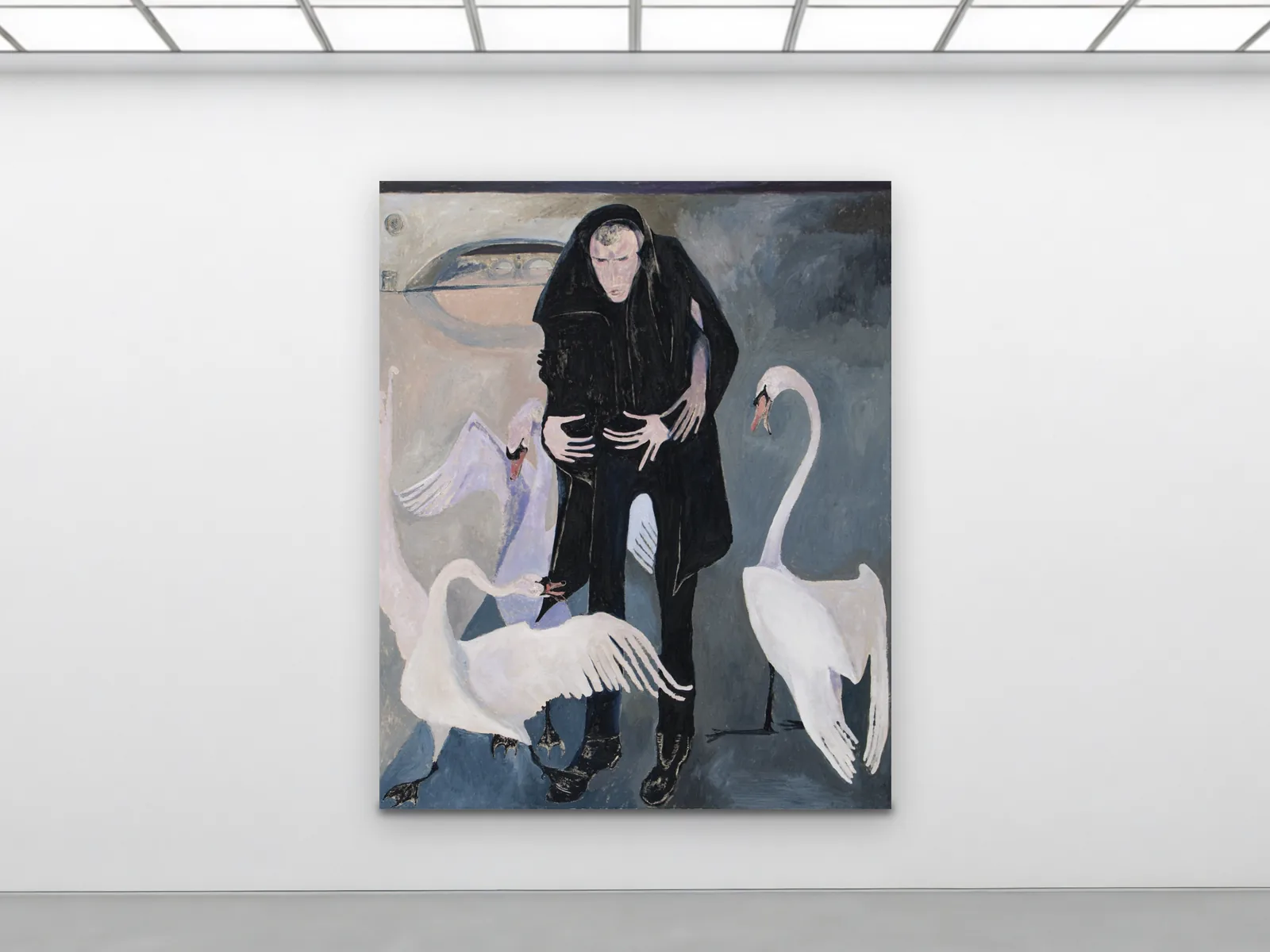
Konrad Żukowski Untitled (Swans), 2024 A man in a black coat stands among swans in a park, most likely in Paris, where Konrad Żukowski lives and works. He walks through the city without a destination and that is exactly why he sees more than those who are heading somewhere. The French have one word for it, flâneur, which other languages have never really translated. There is no telling what has just happened. Perhaps he ran out of bread for the swans, perhaps he never had any, but that is not the point. The point is the moment itself, in which someone stands inside something larger than himself.
And if you count his hands, there are more of them than there should be.